Showing posts with label Finances. Show all posts

Monday, April 24, 2017

Making Money Last

Library of Congress:  Flower Vendor's Easter Display, early 1900's. New York


I was in the hardware store the other day. They had an entire floor devoted to decorative gardening accessories, patio furniture and pretty benches.  There were swimming pools and barbeque sets.  It was so much fun just looking at everything.  I saw the sweetest little garden turtle.  It was a decorative item for the outdoors.  It had the happiest, cutest face painted on.  I thought my grandchildren would love it.  But the cost was $28.  So I just stared at it for a bit and then moved on. 

Over the weekend, I was in the drugstore picking up a prescription for my husband.  I love to browse around while I wait. They always have such nice seasonal items.  I noticed they had a similar turtle as what I saw last week.  This one was a bit smaller, but just as charming.  It cost only $5.  I was delighted and happily paid for it.  I plan to put it in the front garden this coming week.  I know the grandbabies will love to see it as we tour the grounds on our regular walks this season.

Buying things on impulse can be such a dangerous thing.  Our money can disappear so quickly if we are not careful.  But occasionally buying something inexpensive that makes us smile can be pleasant.

This winter, I took all my saved coins and gave them to one of my grown daughters.   It used to be easy to save for a rainy day by filling up jars full of coins. But now the bank won't accept the rolled money. Instead, they direct people to a machine in their lobby. This machine counts all the change and prints out a slip so you can get dollar bills at one of the teller stalls.  But the machine deducts a certain amount as a fee.  I just cannot fathom paying this. It is such a waste, even if the charge seems small.  So I have been keeping a change purse with me.  Whenever I do any shopping these days, I count out the exact change.   It takes a few extra minutes, but I no longer have to worry about what to do with a jar full of money that is difficult to spend. The days of saving change for a rainy day seem to be out of fashion.

Since we homemakers do a great deal of the spending in a household, it is important that we find ways to make the money last.   Each week, I have been taking my receipts and recording my spending in a journal book.  This is for groceries and gas and also any bills I have paid.  I want to remember where the money went.  This helps me be more careful. I also enjoy remembering some of our adventures by reading old entries.  The day I bought the garden turtle and wrote it in the book will make me smile.

Dressing up to do errands or to go shopping was common in earlier days.  My mother always did this. She would put aside her housedress and put on something nicer before going out.  Rushing out the door all the time to get things we forgot, or to hurry some errand can cause us to be wasteful.  Often we will be in such a rush that we buy what is convenient or quick.  This will waste money.   Finances are a serious matter. We need funds for food, housing and clothing. These are basic needs.  But we should treat that money with a great deal of care and planning.  I always dress up a bit before going out because I am more careful in what I do.  Dressing up a little is part of being prudent.  It is part of being cautious and precise in such an important job as spending the household funds to care for the family.

Impulse buying should be so rare that we are thrilled when we actually spend a bit of money that was not planned.  This will make us very grateful for the little treats we have in life.

Making money last just means we don't easily part with it.  We are slow and careful with our spending decisions. We keep our bills and expenses low so we can have money in a savings account.  This is being a wise steward with what we have been entrusted with.  It also brings great peace and happiness to make that money last as long as possible.

Blessings
Mrs. White

From the Archives -

The Example of D.L. Moody's mother - Poverty in the 1800's.

My first Mother's day garden - Attempting a Garden.

Calling the Family Home - Mother's Dinner Bell.


Find Home-keeping Inspiration, in Mrs.White's book -Mother's Book of Home Economics .  Paperback, 312 pages.


 - To find out more about this blog, or Mrs. White, please visit our About page. -


Sunday, December 11, 2016

Retirement Planning for the Poor

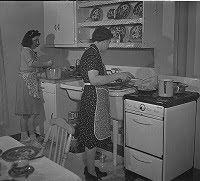
Library of Congress:  New England Housewife 1940


In my childhood days, living in New England, there were many called "the working class."  These were traditional families where Dad worked while Mother stayed home to care for the family.  It was a simpler time.  (By today's standards, financially speaking, these would be considered "poor" people.)

Mothers were busy making food from scratch. In those days, convenience food was not common. Most Housewives did not trust pre-made frozen foods! They had always made their own food and felt it was wholesome and nourishing.  Mother took pride in feeding and caring for her husband and children.

These Mothers deep cleaned their homes on a regular basis. They mended the family clothing. They were productive at home doing things that did not earn them any money.  The fathers went to work earning the living.

In those days, debt was something to be avoided.  But the goal, here in America, was to own one's own home.  In the early 1970's, many houses were available for around $20,000.  These were lovely homes that were very simple.  Once a family purchased a home, they generally stayed there. This established neighborhoods and communities with people everyone knew and trusted.  This also gave them security that they had a home which was either "paid for" or would be paid off in the near future.

Owning a home was a big part of financial planning. It brought stability and security.  In some families, particularly in Italian homes, once Mother and Dad were older, they would have a grown child still living with them, perhaps a son with his wife and children.  This helped them take care of one another. It also kept expenses low since there were more people to share the work and the cost of living.

The house was kept within the family.  Sometimes a bachelor son or maiden daughter was still living in the house when the parents passed on to Heaven. It was called "the family homestead," even if it was a small house in the suburbs of Boston.

The biggest investment a family could make was to own a humble home.  Planning for retirement meant working for as long as it was physically possible. It meant making sure there was a gravesite for the final resting place.  It meant doing one's best to have a basic life insurance policy to cover the cost of a burial.

Things have not changed that much.  There are still "working poor" families whose best investment is owning and maintaining the family homestead.   In Scripture we are told that the poor will always be among us.  There is certainly nothing wrong with being either poor or rich.  There are just different ways of living and planning for retirement.

I have always loved having a house full of people. It is a blessing to have grown children, and even grandchildren living in the same home.  This is what I have grown up with, and what I have always known.  (For those who are not familiar with this kind of life, there is an excellent example of this on the television show, "The Waltons." )

Middle and Upper class families may have all kind of investment strategies.  There are excellent books which teach all about retirement planning for those with "disposable income."  It is certainly important and noble to be a good steward of the money one has.  But realistically, the working poor are not going to have investment portfolios or plans of retiring from work early.  They are not going to have disposable money.  And that is okay! 

I have seen many of the working poor live beautiful lives of simplicity and godliness. I have seen them live with a focus on their Eternal Home.  The contentment they feel is inspiring.  They have worked hard their entire lives and passed on the work ethic to their children and grandchildren.  Their values of morality, thrift, and charity are admirable and worth emulating.

Sometimes, the main goal of retiring for the poor is simply looking forward to that incredible resurrection morning and hearing:

"Well done, thou good and faithful servant. . .  enter thou into the joy of thy Lord."
 - Matthew. 25:21

Blessings
Mrs. White


From the Archives -

Old Fashioned Living - Thrifty Elegance.

In Case You Wondered - The Secret to a Clean House.

Old Time Frugality - To Earn and not To Spend


- To find out more about this blog, or Mrs. White, please visit our About page. -


Find Home-keeping Inspiration, in Mrs.White's book -Mother's Book of Home Economics .  Paperback, 312 pages.


Wednesday, February 18, 2015

Despairing over the Cold


This is the time of year when despairing over the cold is common for me.   Last month we ran out of oil to heat part of this large 1800's house. I had an emergency delivery arrive the following morning.  It happened again the other night.  I was woken up in the middle of the night because there was no heat.  It was below zero outside and the temperature was rapidly dropping in the house.  I called the oil company first thing in the morning.

That day, the grandbabies and I spent the day in the parlour near the wood pellet stove. We couldn't play in their rooms because it was too cold.  The babies were entertained with toys, crayons, snacks and some children's movies.  Every now and then, one of us went downstairs to the nursery to get a few more toys. We had to wear a coat, it was so cold in there!

By midafternoon, our oil arrived and the heat was turned back on.  It took a few hours for the temperature to rise. The despair of being cold turned to joy. It is amazing how the simple comfort of warmth can delight the heart! By the children's bedtime, all was back to normal. 

After this ordeal was over I thought about the Pilgrims.  They had settled on the coast in a Massachusetts town.  Today, a living museum shows visitors the reality of the harshness of their living conditions.  Ocean air is bitterly painful and cold in the winter.  I cannot imagine how they kept their spirits up to get through the cold! 

In my father's boyhood days, everyone used a wood stove for heat.  The fire would be allowed to go out when it was bedtime.  The children often shared a bed and were covered with homemade quilts.  Mothers would also have hot water bottles or warm baked potatoes wrapped up by their feet for the children to give them extra warmth.   In the morning, someone would brave the icy cold and start the fire so breakfast could be made and the family would get dressed for the day.

In old remembrance books children wrote of waking up on cold winter nights to find snow had come through the roof and landed on their quilts.  They would also get dressed by the kitchen stove because that is the only place in the house where there was warmth.  These same children would attend a one room schoolhouse which was heated by a wood stove.  The desks would be moved to keep the children as close to that source of heat as possible.

These stories make me realize how very pampered I am.  But being warm is one of the greatest needs during a New England winter.  Many people spend the year saving for a family vacation, or a shopping spree. We spend our year saving up every dime we can to buy our heat for the winter.  I won't even let myself think of what it would be like to visit Hershey, Pennsylvania, Dollywood in Tennessee, or even Disneyland, because as wonderfully enjoyable as those trips would be, I am only able to sit by the wood stove in a rocking chair, reading my Bible, and waiting for the winter to thaw out into a pleasant spring. 

Blessings
Mrs. White

- To find out more about this blog, or Mrs. White, please visit our About page. -


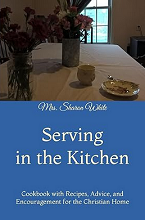
For happiness and cheer in the kitchen:

Mrs. White's old fashioned cookbook focuses on serving meals and setting the table in a humble home.


"Serving in the Kitchen: Cookbook with Recipes, Advice, and Encouragement for the Christian Home"

152 pages, paperback

Wednesday, February 11, 2015

Economy For The Christian Home


~ Our newest book, brought to you by "The Legacy of Home Press." ~


This book was written while taking care of grandbabies, cleaning the house, cooking, and caring for the family.  It was very difficult to write in my notebook when everyone was sleeping, or jot down Bible verses and look up passages while dinner was cooking.  It took many hours of formatting, proofreading and fixing mistakes.  It is still imperfect, just as I am. (gentle smiles). 

The front cover is of our Vermont property. The photograph was taken in November 2014. We still have lots of snow here as it stays all winter long in northern Vermont.  In the picture, you can see our tall Christmas trees, our American flag and our old wooden wagon.

The book is designed to bless and encourage you in saving and giving. It includes some personal stories from my own experience, along with ideas for your own home.  I hope this book will encourage you in the careful use of money,  as you strive to be the kind of wife your husband can say he does not worry about the waste of domestic funds. (Proverbs 31:11)

Details:

 A Bible study designed for individual or group use.

{Scripture quoted in this book is from the KJV Bible.}

 Includes:

- 12 challenges.

- 12 homework assignments.

- 12 devotionals to inspire and motivate you.

You will learn about a "Charity Box" for the home; how "New England Thrift" can help you save money; how "Prayer Directed Giving" can warm your heart; what it is like to "Live in Reduced Circumstances" and much more.

At the end of the 3 month program, your house-account should be more efficient. You will have money in your savings account and your giving will increase in ways that will bless you and others as well.


Mrs. White's book on Saving Money and Inspiring Charity:

-Economy for the Christian Home.  

Paperback, 110 pages. 


Blessings

Mrs. White


From the Archives -

Finding Happiness at home - Poor and Pretty Living.

We Need More of This - Homemaking Propaganda.

Nourishment and Frugality - Basic Cookery.


  - To find out more about this blog, or Mrs. White, please visit our About page. -


Wednesday, December 17, 2014

Living in Reduced Circumstances

Library of Congress - A Farm couple doing their bookkeeping at home 1930


Several years ago, during a major oil crisis, gas prices rose to over $4.50 a gallon here in rural Vermont.  This caused food prices to skyrocket, partly due to the cost of fuel for the freight trucks who were delivering inventory to all the supermarkets.  

Many could not afford to drive to work and had to find ways to carpool, walk, or find some other form of transportation.  I remember having to give up going to church and limiting youth group events for my (then) teenage children.  It was shocking to realize we couldn't afford the gas to drive to church!

One of the hardest things during this time was having just enough food to feed one's family with little or nothing left over to share with a guest. Many did not entertain at home. Having company was rare and difficult. Offering just a cup of tea to a guest when one wanted to offer cake or pie was depressing!

Nobody wants to live in want or hunger. Nobody wants to feel like buying sugar to bake cookies would be a financial burden when the family needed more nutritious foods like vegetables or meat.

Food pantries in our county were suddenly full of the more affluent in our area.   We were told that many could not afford to buy food and pay basic living expenses at the same time.  One large church in our area was open on a daily basis and gave out emergency food boxes which were expected to last a family, or individual, for a couple of days.  We were seeing both homeless and middle class in the same breadlines.  Nobody wanted to be there.  Nobody wanted to need charity, but the economy forced many to seek help just to eat.

Another church in our area had a monthly potluck supper offered right after the morning service.  Almost everyone brought hot food, desserts, salads, bread and treats to share with each other.  This way each family could contribute what they could and enjoy a nice big meal without feeling like they were getting a handout.    This same church also provides a large spread of refreshments in the dining room after every Sunday service.  Most of the food is brought in by members of the congregation and is a lovely way to comfort one another with both food and fellowship.

There were certain days of the week where local supermarkets would provide display tables with food samples.  Children of customers were also given a cookie from the bakery or a piece of cheese from the deli.  This made grocery shopping, on limited funds, a special outing and a way to gratefully enjoy a special treat. It benefited the stores as well since they were able to offer new foods, and have a nice way to encourage customers to shop.

Today, times are better.  Gas prices have dropped to around $2.88 in our area.  This is the lowest I have seen it here since before the oil crisis hit our nation.  Yet, there will always be someone, or some family, struggling through a time of poverty, a time of "reduced circumstances."  These are the people on a financial adventure who will overcome the difficulties with prayer, faith, hard work, and the blessing of a good church family.

Blessings
Mrs. White

* [This post is an excerpt from my book, "Economy for the Christian Home."] *


From the Archives -

I will never Regret Staying Home - A Humble Parlour as a School of Theology.

He Still Hears us - Prayers Which Cannot be Uttered.

Marriage - When Groceries are the Presents.


 - To find out more about this blog, or Mrs. White, please visit our About page. -


Read Mrs. White's book on Saving Money and Inspiring Charity:

-Economy for the Christian Home.  

Paperback, 110 pages. 


Monday, March 17, 2014

Living on Mister's Income

LOC: A Farm Couple doing their bookkeeping at home, 1930.


One of the greatest challenges of the Christian wife, is to live on her husband's income. We are constantly tempted and encouraged to earn some supplementary money.   We are also bombarded with ideas for spending our money in ways that will "save" us money.  It is almost comical to think that spending money equals savings on any level!

Regardless of one's financial situation, one can spend every single dime that comes in; or, one can spend less than one makes.    It sounds simple in theory but is actually very difficult.  It is a fight, which goes on in the mind.

We have to fight against the idea that we need more.  We have to fight the temptation to buy things on impulse.  A responsible, elderly adult, is not in the habit of buying on childish whims.  This is a lesson we must learn.

The handling of money takes careful planning and thought.   For the housewife, it should also take a feeling of contentment and an understanding of the privilege of having the luxury to stay home in this modern world.

I have noticed recent television programs and hallmark movies.  They always include a career woman, or some feminist actions on the part of the female characters.  When I watch old episodes of "I Love Lucy;" "Father Knows Best:"  "The Donna Reed Show;" "The Waltons;' or "The Brady Bunch" I am shocked by the shift in cultural thinking.  A Study in social living is happening by simply watching the old programs and the new ones!  Our way of life today is affected by the messages we are being fed through the media.  We must keep our guard up to prevent a subtle change in our own homes. 

Lately, I have been struggling to live on my husband's income.  This is normal and happens in many homes.  This morning it is fourteen degrees below zero, here in Vermont.  There is a ton of snow, which shows no sign of melting.  Mister took $20 of our grocery money to buy us 4 bags of wood pellets for our stove.   This will last us until his next paycheck.  But it leaves me with the struggle of coming up with nutritious and filling suppers for the next few days.  I will get out some of my old cookbooks and think of creative ways to make do.

I have been dreaming about getting the garden ready on the back property. I am thinking about my strawberry plants and all the lovely foods I would like to grow.  I look forward to the sweet warm sunshine of summer days, and hanging clothes on the line.  I want to see the grandchildren enjoying the property and laughing outdoors.  I am able to do these things because each day, I learn to live on Mister's income.  It is not easy.  It is my work, to live within the means he provides us with.  It is my challenge and my victory. 

I cannot express how very grateful I am to be a Christian housewife and be humbly taken care of by my husband.  Despite this world that seeks riches and fame, I am grateful for the old paths my godly grandmothers tread before me, where Bible reading, prayer and humble living is our way of life.

Blessings
Mrs. White


From the Archives:


Our Heavenly Father Hears even these - Prayers Which Cannot Be Uttered.

We all need this - Peace Be Upon This House.

Old Time Wisdom from Colonial Days - To Earn and Not to Spend.


- To find out more about this blog, or Mrs. White, please visit our About page. -


Find Home-keeping Inspiration, in Mrs.White's book

 -Mother's Book of Home Economics .  

Paperback, 312 pages. 


Sunday, January 5, 2014

Surviving Financially

LOC: Noah Garland's barns and home on the hillside, Appalachian Kentucky, 1940.


Many of us are struggling financially. The culture around us is debt-ridden and debt - dependent. This brings about an illusion of suffering. What do I mean by that? Well, if we live in America, "wealth" (compared to third world countries), our standard of living, our standard of "need" becomes distorted.   We think that if we don't have a new vehicle, we are poor.  We think that if we don't have a nice house to live in, we are poor.  We think that if we don't have enough money to go on vacation, or that we don't have enough gas money to go out for a drive, we are poor.  We think that if we can't buy junk food today, we are poor.  This has taken away a great deal of our courage in financial survival.

We have become weak, and pampered, when it comes to standard of living.

Last summer, I wrote about how my car died.  I have not driven at all since then. It has now been 6 months.  I have been mostly home-bound, other than an occasional ride I get to the market.   Shortly after this happened, my husband's van needed repairs that we couldn't afford. So he started "Yankee - style" repairs on his old Cadillac and got it to barely run.   It has failed him repeatedly in the last few months and is on the verge of dying.  He is now getting rides to and from work from co-workers.  We have old cars.  We obviously need a new one.  We have no debt, and little savings, so we must save and scrimp until we have the money for one.  We have suffered for the last 6 months, but we know that we are going to be okay.

It used to be that people had to walk many miles each day.  They had to work much harder to grow, gather and preserve food.  Today, we have buses and cars and large supermarkets. We don't have to make clothes for our entire family, we can buy them inexpensively.  There is less worry and less work.  We have it much easier.   Yet, when hard times come, when it takes more effort to pay the heating bill, or make food from scratch because we cannot afford the high costs, we have to bravely face each day and know that we are going to be okay.  We need a good outlook and a good attitude.  We need cheerful courage.

This is the Pioneer Spirit. It is the Immigrant Spirit.  We work very hard, we take on the task at hand, live the lot we've been given to our very best, and we wait until the blessing comes.  We work on through the dark, dreary days, waiting for the Spring, or the Rainbow of reward.  Good things will come.  The fruit of our patience and hard work will happen if we don't give up.

In the meantime, we keep praying and making do.  God is with us. Praise Him in all things. We can do this!

Blessings
Mrs. White


From the Archives:

Remembering my Childhood - When Television was Special.

The beauty of a formal morning table - Breakfast at Home.

Mother's work - The Pleasant Task of Cleaning


 - To find out more about this blog, or Mrs. White, please visit our About page. -


For happiness and cheer in the kitchen:

Mrs. White's old fashioned cookbook focuses on serving meals and setting the table in a humble home.


"Serving in the Kitchen: Cookbook with Recipes, Advice, and Encouragement for the Christian Home"

152 pages, paperback


Monday, July 15, 2013

Home Shopping (History and Warning)

Ordering from the Sears Catalog, 1940 (LOC).

 
It used to be that every home had a Sears Roebuck Catalog.  This was a large book containing every kind of item you could possibly need.  It was a published mercantile for the home.   We would fill out order forms and mail in our order; Then eagerly wait for the postal delivery!   We children were often seen with the catalog, dreaming about the clothes, toys, and decorations we wanted.

Years later, they stopped publishing.  New ways of shopping were coming into fashion, and perhaps mothers at home were becoming more mobile - more able to go out to the stores. Mass shopping, for fun and recreation, was gaining popularity.   One of the saddest days in American family history, was the day Sears stopped printing their catalog. 

In the late 1980's cable television started appearing in homes.  This also brought a home shopping channel.  We were able to sit under constant sales pitches, and put under pressure, to order within the next 5 minutes or the item would be "gone."   Many bought jewelry, decorations and clothing through the telephone.  The panic of the ending sale played with the emotions and made us feel like we had to have it now.  . . This was the beginning of brainwashing (or brain-training) to turn the culture into a shopping- focused society, rather than a home- and- family focused society. Prudence, diligence, patience and hard work were being slowly eroded from our characters.

Today, we have Internet sales, and online shopping options.  This is certainly helpful for those who are generally homebound, or unable to get out much.  But we are still seeing the "buy now," and the "sale ending tonight" pressure that we never saw in the old Sears Catalog.  If we are not aware of these sales gimmicks, and are not armed with knowledge to fight off the fear of not "getting that sale price,"  we will be sucked into the lure of shopping for recreation; buying things we don't need, and of shopping without hesitation or prudence. 

Shopping from the comfort of one's home, with seed catalogs and Lehman's catalogs, while gathered around the kitchen table, are good ways of slowing down the spending process.  We may dream over the items, plan what we will do with them, and carefully come up with a wise shopping decision.  This is one way to counteract the consumer craze that has taken over our nation.

Blessings
Mrs. White


- To find out more about this blog, or Mrs. White, please visit our About page. -
Friday, May 3, 2013

Overcoming Hard Times with Grace

A Summer view of one of the lakes near our home in Vermont.


In this economy, many of us are struggling. There is a confusion added to this, about standard of living.  We see magazine covers at supermarkets of beautiful homes and elaborately prepared foods.  We see television programs about rehabbing houses, and making them "livable" with the latest upgrades.  This is like an upgrade in standards, and it costs far more money than most of us can manage.

It used to be that thrift stores and churches had decent clothes available for free, or for a meager cost.  Many mothers used to talk about the missionary barrel.  When times were hard, they would find clothes and remake them with what they had at home.  They made lovely things with their own efforts, out of cast-offs.   

Mothers were able to create recipes based on what was left in the pantry, rather than what was for sale in the store.

Home repairs and maintenance was done to survive, with scrounged supplies, or inexpensive parts to make-do, for those with little money.

I realize we need certain skills to create out of little, but we can certainly learn. 

Money used to mean something different than it does today.  Money was for basic housing and basic needs, and an occasional treat, rather than for splurging and spending on what we want right now.  [Or what we think we need in this confusing, consumerist, culture.]

We need a good does of the history of the family during hard times.  We need to read about the depression-era mothers, the pilgrims, and the pioneers to find a way to overcome the culture of today, with dignity and grace.


Blessings
Mrs. White

From the Archives -

Peaceful living From the Old Days - Sunday Driver. 

Old Time Manners - Waiting for the Door to Be Opened.  

Living on a Small Income - Standard of Living


  - To find out more about this blog, or Mrs. White, please visit our About page. -


Find Home-keeping Inspiration, in Mrs.White's book - For The Love of Christian Homemaking.  


Paperback, 274 pages.


Thursday, January 3, 2013

My Husband's Money

Library of Congress: A Farm Couple doing their bookkeeping at Home in 1930.


My old fashioned ledger book is for my "House Account."  This year, as I started the 2013 entries, I gave the book a title.   It is to be called "My Husband's Money."

Each evening, as I write down any money I spent that day, I will see the title.  I will know I have been given a great privilege and honor to be put in charge of the management of Mr. White's finances. 

The last few weeks, in the bitter Vermont cold, I realized I needed a new pair of house slippers.  It was dreadful coming in the house and taking off my winter boots and just feeling so cold.   After some time, I stopped into a store and found a suitable pair for $6.00.  I also bought a special welcome mat to put in the front entry way. This cost $3.00 and is quite necessary since it helps get some of the snow off the shoes of the guests as they enter our home.  I was pleased with the practicality of buying both of these items.  The total will be handwritten in my book, along with an explanation of what I bought and why.  This is the recording of the history of my spending for the household of my husband.

At any moment, as I sit near the fireplace and hand-write entries in my financial journal, I would be proud to have my husband look over my shoulder and know I have done well with his hard earned money.  He will be content and at peace with his household affairs, being carefully tended by his trusted wife.

This accountability, of calling this year's Ledger book, "My Husband's Money," will give me a constant remembrance of the honor in which I have been given to take care of his funds.   It will stop me cold when I am tempted to spend frivolously and foolishly.  It will help me to keep a long-term perspective - of the future history we are making with our spending and saving, and prevent me from causing harm or waste in this materialistic culture.  


[Edited update] -  My House Account has brought me a tremendous amount of questions.  To answer these, I have put together a book, which will describe my method in great detail: 


For old time encouragement in living simply on a limited income, order Mrs. White's book:

"An Old Fashioned Budget: Humble Financial Management for the Christian Housewife"

This is a slim, 77 page, paperback book.


My ledger book is not a budget. (I have a separate notebook for my weekly bills and planned expenses.)  It is a financial journal.    I can look back through the pages and see how much I spent each month and each year.  I can also see the carefulness, the love, the attention, and the reason behind the spending (there are notes in the entries) and look back to see the financial lives of the White Family Home.

Blessings
Mrs. White


- To find out more about this blog, or Mrs. White, please visit our About page. -


Friday, August 17, 2012

A Vow of Poverty

A Mother at home with her child, North Carolina, 1939, LOC. 


It always happens. . . We Mothers start building up our savings and something comes along to take it away. But most often, the need is for those around us, especially our own children.

Godly Mothers and Fathers often make a subconscious vow when they start a family. The vow is one of poverty.  This means they pledge to spend the majority of their money on the needs of their children. ("Needs" not "Wants.")

We never see these kinds of mothers in costly array, or in fine homes.  We don't see them shopping idly in boutiques, or dining in elegant restaurants. These mothers use their material resources to care for the poor, and the needy, even if that is often their (old or young) children.

Old Time Mothers in Poverty would scrimp and save and find ways to make sure their children had decent shoes, nutritious foods and a humble home.

When money came in and was saved for a rainy day, Mother was delighted to have the cash to feed a hungry, weary soul, who had entered her cozy parlour to take a break from the painful world.

All money that is used for selfish needs, all health that is consumed to glorify self, all worries of reputation fall by the wayside for the godly mothers.  She seeks not her own gratifications. 

The vow of poverty is not a promise to live a destitute life. It is a pledge to use all that goes through her hands, to bless and encourage those around her.

If I pledge my "wealth" and my "health" and my "reputation" for the ministry of my own family and for those that come through my door, I have made a vow of poverty for the Lord.

This means I will spend on that which is eternal.  I will find a way to serve despite my health issues.  I will not care what others say or think of me, but only care of the view from God's eyes.


Blessings
Mrs. White

From the Archives:

What many of us crave - An Ordinary Life at Home.

An encouraging example - My Mother's Chores.

Finding Genuine Happiness at Home - Peace be Upon This House.  


 - To find out more about this blog, or Mrs. White, please visit our About page. -


Help For Homeschooling:

Seeking a Thrifty and Simple Life: Encouragement for Christian Homeschooling by Mrs. White

Paperback, 112 pages

As you read this book, I hope you get a sense that, no matter what is going on in the world, every home can be a homeschool. 


Wednesday, July 11, 2012

How Much is a Housewife Worth?


It amazes me that people still think homemakers lay around and do nothing.  Obviously it varies in each family, but for the most part, a working- class housewife is very busy, and saves her husband a fortune.

Here are some examples of what she does on a regular daily/ or weekly basis. (Please note - I am speaking generally here. This is just a list of very common examples of what many housewives do at home) -

FOOD

1. Cooks Homemade foods (saves money on restaurants). 

2.  Her home cooking keeps the family more healthy (less doctor bills or health troubles).

3. Her homemade meals and snacks fill the family up, so they are not as likely to eat large amounts of expensive store -bought junk food and snack items.

4. Her meal planning and frugal shopping strategies is like doing inventory-control in a restaurant. She works hard to avoid waste and excessive spending, keeping the grocery budget in line.

TRANSPORTATION

4. If she is home most of the time, she is not wasting money on gas, or impulse spending.  There is less wear and tear on the car. 

Being home helps her be more creative and resourceful. When she is less stressed, she can do more work at home.  (This is not to say she should never go out!)


MAID SERVICE

5.  It would cost $40 and up each week to hire a maid to deep clean the house.  This includes washing floors, dusting, vacuuming, cleaning bathrooms and scrubbing the kitchen.  The housewife does these jobs herself. She also trains her children to help  with these chores.

CHILD CARE AND EDUCATION

6.   Hiring a babysitter or putting the children in day care can cost something like 100 plus dollars each week.  A Housewife who is home, can take on this job herself, saving a fortune of the household funds.

7. Tutoring, teaching and training of young children can generally be done by the housewife. Some homeschool their children which saves a fortune in "back-to-school" clothes, tuition, and transportation.

MEDICAL CARE

8.  Mothers who are home can nurse their families back to health, and help maintain their well-being. They can also help prevent the spread of germs and build up immune systems with their careful nursing.  Mom will certainly bring sick ones to the doctor when necessary, but she is able to generally care for many things on her own.

9. Housewives are also called on for psychology. They listen and guide and help solve the family troubles.  Their loving concern and attention soothes the aches of others and helps them back on the right track.  Since these mothers are home-focused, they are not being pulled in all directions, and have the time to peacefully handle a crisis when it comes along.


HOUSING

9. She is generally more content with a less expensive home.  There is no need to maintain an expensive two-income property. This saves money on insurance, repairs, maintenance, upkeep, mortgages, and so much more.

10.  The housewife can do her own frugal decorating. She can keep a nice (yet humble) home with all the time she has at her disposal. 


PEACE

11. Have you ever noticed the joy of going into a home where the mom is home and happy? The house looks fairly neat. The children are being cared for.  There is good food waiting to be served.  It is a happy place to be. [Is there a dollar amount for that?]    Of course, this is not to say that a housewife will never get grumpy. How boring would that be?


BIBLE TRAINING

12. The Housewife is able to have time to teach her children the Bible, to read with them and to encourage them to have strong religious values.   Abraham Lincoln grew up in a home where the Bible was valued, respected and read.  The Word of the Lord brings wisdom and this helps raise good citizens.  When a Home has the constant presence and  influence of a godly mother, such great things can happen to a nation!  [What is this worth in dollars and cents?]

(Are we, as a nation, losing more than just money when a diligent housewife is no longer at home?)


Please consider adding up how much is spent each month when a housewife doesn't do these things at home.  I know it would be time consuming, but those dollars and cents add up to a considerable sum of money, which could be used for so many other things.  Imagine taking that monthly figure and multiplying it by 12, then multiply that by several years, and you will have an amazing nest egg that will astound you.

What if having mom home made it possible for the family to NEED LESS INCOME?  Would the Dads be able to spend more time at home? Would the family have more time together?

Perhaps this is one way of getting off the common money quest, and of hiring out all the work a housewife is capable of doing at home.  

Now tell me, how much do you think a housewife is worth?  And what other ways is she saving her family a fortune?

Blessings
Mrs. White

- To find out more about this blog, or Mrs. White, please visit our About page. -

Monday, July 9, 2012

Financial Separation of the Social Classes


Throughout the ages, there have always been different "classes" in society. We have the wealthy, the middle class, the lower class, and those in complete poverty.   In our current day, we have an illusion which masks our social status.   Obviously this is because we are able to carry debts to live at a higher standard of living. 

What I want to do today, is briefly examine the different classes. My hope is that once we see which class we are in, we can either be content and live accordingly, or we can work hard and responsibly to move to a higher financial class over a reasonable period of time.

The Wealthy

These are the financially independent. They have passive incomes. Passive - meaning without any effort. No labor required.  This income could be from a trust, an inheritance that was invested giving them continual payouts, stock income, or other investment income. Another possibility - generally for the young -  they receive an income from family as long as they do as they are told. (You've heard the threats of the ultra rich saying they will "cut off" all support if they don't do as they are asked?)

 Most commonly, the ultra - rich have wealth that has been carefully accumulated and passed down from generation to generation.

Characteristics -  They tend to own multiple homes, vacation properties, have a full staff of servants, own multiple businesses, own yachts, travel the world, have expensive cars and spend their time at charitable events, visiting, and carefully overseeing the family fortune.

If you have plenty of money to do whatever you wish, without any need to work whatsoever, you are in the wealthy class.  Very Few will ever move up to this rank.

 (Just in case you were wondering, I don't personally know anyone who is in this class. Also, if it wasn't obvious - I am not in this group :)


The Middle Class

Generally, this is the professional class. These tend to be college educated, white-collar workers.  This class has to labor to earn their income.   Many have been brought up in similar homes, by college educated parents and come from some sort of privileged background.  Privileged - meaning by white collar parents who have financially subsidized their children's growing up years and have helped them get established as adults.  

The key to surviving in this group, it seems to me, is the education.  These people are highly educated.

Characteristics - They own at least one very nice home in a beautiful neighborhood.   They may or may not have dual income couples. Many have only one parent working. The other parent tends to the affairs of the home, their social obligations, and community events.  This group has at least one domestic staff member. Either one full time maid, or a weekly maid service. Some have nannies and cooks.  This group goes on vacations and has a generously budgeted amount of spending money.  Their children tend to get an allowance, have plenty of new clothes, and can shop as needed.  This group has medical and dental insurance, and other benefits from work - like stock options, pensions and retirement plans.   This group has no financial  trouble getting on a plane when necessary.

This group is not wealthy since they have limited resources, which are dependent on working and getting paid in order to maintain their status.  

This group can, over generations of careful investments and a savings plan, move up to a budgeted state of financial independence. (This would be from passive income, built up and invested over time).  They would remain on a budget to make the money last, but they would be comfortable.

It is very difficult to  move up to this class, but can happen with help, encouragement, and possibly a generation or two of very hard study and work.   ( I personally know several people in this group. Some are even related to me.)

Can this group drop to a lower class? Are they in danger of this? Most definitely.   Two possible problems could come up - a lifetime of financial mistakes, or a collapsed economy.


The Lower Class

This is the blue-collar group who labor for their money. They may or may not live from paycheck-to paycheck.  Generally speaking, this group is NOT college educated. Or, at least does not have a college degree.  In my observation, there are two types of the lower class:


1. The Strugglers
[Those who struggle constantly to get to a higher class, and who are often in debt and have constant financial trials.]

Characteristics - This group may own or rent a home. They might finance a car. They might finance all manner of things and begin to require consumer debt just to survive. This group is often trying out the latest "get rich quick" program, hoping it will make their lives better. They are on a quest for money, but don't understand the concept of money. This group tends to have very little financial education. They may bounce checks at the bank, cannot balance their books and argue with bankers about overdrawn accounts. They have trouble paying their bills and misspend much of their earnings. They blame others and the economy for their woes.

This group cannot move to a higher class and will not even more to the class of "the content" [below] in their level because they cannot slow down long enough to change the way they live. In most cases, their children will repeat the same patterns.

2.   The Content
[Those who tend to avoid debt, and manage to generally be content with their lot.]

Characteristics - This group may rent a home, or own an inexpensive house. Very few of them ever finance a car, furniture or anything else that would cause debt. Not because they are necessarily averse to it (they are) but because they do not want to put other things in danger by promising over future money that they aren't sure they can consistently keep up with.  These people tend to be content with inherited furniture (or things bought at second-hand stores), and few possessions.   Once this group has enough chairs, and other furniture, they rarely ever buy more (or new) their entire lives.

They are very diligent at saving and careful spending. Their home expenses are kept to a minimum by very frugal endeavors.  This group will have to work their entire lives in order to keep to their standard of living.  They have no funds for a domestic staff. They generally do all their own home repairs, housework and car repairs. Or they trade out with friends, by helping each other.  In some cases, they do hire help for emergency situations but these expenses put a tremendous burden on their finances and could put them in danger of going hungry or having an electric bill shut off, or lose their winter heat, until they can get their bills caught up.  Some will find odd jobs (if they are lucky) and work a horrific amount of hours just to keep food on the table during this time. But these people have great characters, and a tremendous work ethic. 

It is possible, however, that their children can move to a higher class. Through sacrifice and hard work, their children can become educated in high paying trades, and carefully taught skills (both hands-on skills and book learning) to be able to earn a high and steady paycheck.  In must be noted here that the children themselves have to be hard working in order for this to work.

This group is highly educated in frugality and thrift. This is what helps them survive. They are also fully aware of the stock market, investments and money management, but are not able to use those skills with their limited earning potential.

Those In Poverty

This group can include those who are homeless, or those who are completely dependent on others for basic needs.  Anyone from any class can fall into this category, and it is devastating.   This group is not necessarily a "class" but a part of society where help is greatly needed, and always will be.  Those in the upper classes must find a way to be charitable, through organizations or their local food pantries, etc. to help on a regular basis.

Conclusion


They key to surviving in each class is financial education.  We need to constantly learn and understand the latest developments in our modern world - relating to money.   Even the ultra rich could possibly lose their wealth if a generation of their offspring spent away their money and made poor investment decisions. 

My recommendations to financially survive:

To Get Out of Debt

- Anything Dave Ramsey (He is the only one I recommend for debt elimination because he understands the difficulty of the "now," when one is struggling financially. He is also realistic and an incredible motivator.)

To Learn to Live on Very Little and Be Content

- Anything from The Good Old Days publications (with Ken Tate). Looking back in history to the Great Depression, will help us understand how they got by through incredibly rough times.  There are also a treasure trove of ideas for fun, happiness and inspiration that doesn't require any money.

To Learn To Live on Very Little

 - "Your Money or Your Life" will help put this all in perspective.  This book may also help you get off the crazy "Money Quest" that is ravaging our culture.

To Learn to Invest and Build Wealth

You will get many ideas and inspiration from "Rich Dad Poor Dad".  

Learn how to Budget and Handle money wisely

Anything from Crown Financial Ministries, and the late Larry Burkett is amazing for this!


Being Content in your Class

Now that we've talked about the characteristics of each class, have you figured out where you stand?  I  know exactly which spot our family belongs in. But now the question is, are you content there? Or would you rather work your way up to the ultra rich?

The most important thing about the distinction of the classes, is learning to live as that class must live.  This includes studying money, staying within a budget and finding ways to build the education and skills of your family.  There are only 3 ways of moving up in a class:  1. An inheritance.  2. Winning the lottery. or 3. Hard work, tremendous study and patience!

One of the greatest books written for the lower class (which is the group a great many Americans are in) is "The American Frugal Housewife." Her introductory pages in the beginning are inspiring and sobering. She is also very clear that one should not "dress above their station in life," (which is a beneficial thought relating to the classes. We can't spend more money to live, than we can realistically afford.)

May I just say this? Don't be ashamed of the class you are in. Be grateful. Take pride in your lot in life.  It is amazing that we have so much freedom in this country that we can work our way up if we choose to.  We have the Immigrants as examples. Their hard work and determination helped build the wealth that generations of children now enjoy today.  Take pride in your class, just as the Immigrants took pride in theirs.

Blessings
Mrs. White


- To find out more about this blog, or Mrs. White, please visit our About page. -


Tuesday, May 29, 2012

Family Economy


1911 family working together to earn $3 a week (Library of Congress Archives)

I have been spending a lot of money lately. Each day, it seems, I smile to my husband and say, "Honey, I am broke." He then gives me a little extra cash to get through the day.   I had been so careful for so long, but many things have come up to cause money to disappear.  Either someone has a birthday, event, or a need for special clothes. Or there are extra expenses. Or maybe I forgot how to be creative?

I was thinking about hard working Immigrant families from the early 1900's. Almost everyone in the family worked together (often at home) to earn enough cash to feed, house and clothe each other.  Money was not something to be squandered!  What I would like to do today is consider how they would handle special events where gifts were required.

 - If someone needed special clothes for a church event, wedding, or graduation. I am sure the pride of that family would kick in and all would work extra hard to earn enough to buy the clothes.  Contrast this with today's thinking. We would spend our bill money, savings, or charge the clothes, rather than find ways to earn all that extra money.

- If there was a birthday, they would not go to the local mall to buy all kinds of presents for each other. I am not sure what they would do, but I can guess they would make something, or pitch in together to buy one thing that was greatly wanted or needed.  Gifts were also much more rare than they are today, making them far more appreciated.

It also seems to me that money was earned for more basic purposes in the old days.   I don't understand why, even in my own mind, I have to fight against the constant supposed need for money that I tend to use and waste for my own convenience.

One of the greatest things we can do as a family, is to work together to keep expenses down. We can work together (with our own hands and talents) to cook and to bake and to create, to bless each other. 

In this rough economy, how can any of us dare to be frivolous? Sadly, I don't think I will ever shake this constant fight against wasting something so essential to basic living.

Blessings
Mrs. White

From the Archives -

Today is - A Lovely Day for Cleaning.

A Blessing - The Gentle Art of Homekeeping. 

 
- To find out more about this blog, or Mrs. White, please visit our About page. -

Mrs. White's nostalgic book for Mothers:


"Old Fashioned Motherhood
: Baby and Child Care Advice from a New England Housewife." 


62 pages, paperback. 


Sunday, May 20, 2012

The Excitement of One New Dress

LOC: Home sewing in 1943.


 In my Mother's day, children normally had three outfits. The saying was: "One in the drawer. One in the wash. And One on your back." There were seasonal shopping trips to get a new dress (or outfit) at various times of the year. But it was nothing like today's shopping frenzy, in the modern home.

Before the "requirement" of walk-in closets, people generally had few outfits.  They had what was necessary along with one or two special (dress-up) garments.   There was no need for large closets. It was not a standard feature when building a home.

When young girls were learning to sew, they were excited at the idea of shopping for material, notions and a basic dress pattern. They would spend hours cutting pattern pieces and fabric. They would carefully sew, and try on portions of the dress. A tremendous amount of effort went into making such a dress! There was also much pride in the finished product.  Those dresses may not have cost very much, but they were treasured by each amateur seamstress. 

I still remember how much time went into making my very first dress.  I also remember selecting a pattern for a baby dress when my first child was only a few months old. I loved sewing a dress for her, and trimming the collar in lace!  I have made many girls' dresses over the years and those dresses have been cared for and enjoyed more than any store bought item. Why? Because so much time was spent on their creation.  Most of the dresses were made for a specific event or holiday, but worn many times, over many years.

Of course, in this present day, it is very inexpensive to buy a new dress. Sales at local department stores and the quality of items available at consignment and thrift shops make it very easy to find affordable clothes.   But sometimes I wonder if we buy too many dresses?  

What if we carefully sought out only one dress at a time. What if we bought one dress each season, or made one dress? Would we take our time and make a deliberate selection, rather than just buying whatever was available (or easy)?

Imagine how exciting it would be if we shopped for one pretty dress just like girls of yesteryear searched for a pattern and fabric?  Not only would we save a tremendous amount of money, but we would slowly build a lovely wardrobe of charming clothing!

Blessings
Mrs. White

From the Archives -

Is Mother Required to Offer Daily Desserts? - The Thrifty Kitchen.

How Clean is your House? - Beware of Random Kitchen Inspections.


- To find out more about this blog, or Mrs. White, please visit our About page. -


Find cleaning inspiration and encouragement in Mrs. White's book, "Gracious House Keeping."


"Gracious House Keeping: Advice, Encouragement, and Cleaning Help for the Christian Housewife."

Complete with Encouragement and Work Charts to cheer you along in your homemaking!

115 pages, paperback.